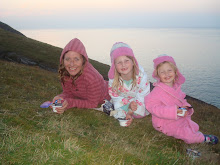
Families following a Gina Ford style approach to parenting should not come to Cambodia right now. I’m not just talking about a holiday, either, though I am still unsure how anyone bound by such strict routine manages to get out of the house, let alone board a plane. Living here with children who require silence and blackout blinds in order to sleep might be problematic at any time of the year. But this month is the start of the wedding season in Cambodia. I am talking serious noise pollution.Take this weekend. Exhausted and recovering from a concoction of nasty viruses, we left Phnom Penh early on Friday morning (Independence Day), and headed for the sleepy, seaside town of Kep. 
There really is nothing much going on in Kep apart from a few restaurants by the beach and a number of hotels dotted around the surrounding hills. In the 1960s it was a popular resort for the French living in Cambodia and was full of holiday villas overlooking the sea. But these were soon abandoned in the time of the Khmer Rouge. Now the blackened, mouldy shells of these houses stand eerily empty behind crumbling walls. Pretty wrought iron gate posts lead the way into overgrown jungles that must once have been beautiful, lush jasmine-scented gardens.  Actually, they are not quite abandoned. Most appear to be quietly occupied by poor Khmer families judging by the tell-tale signs of washing hanging out to dry along the walls, or a skinny white cow tethered among the weeds. There is not much to do other than swim, take a boat to one of the islands, eat seafood with picnicking Khmer families by the beach and watch the sun set over the water. Perfect for a lazy weekend with the kids. I intended to catch up on some much needed sleep.
On our way out of the city we passed so many wedding breakfasts that we lost count somewhere after 30. All over town bright canopies, usually red, orange and gold, are set up in the street outside the bride’s family house, slowing down the traffic as they take up half of the road. Underneath, round tables are laid for breakfast, each with its centre piece of a huge wrapped basket of crackers, sweets and fruit.
To one side, in the open air, the catering staff light charcoal fires and stir huge vats of rice porridge flavoured with tiny pieces of meat or chunks of fish and shiny round mushrooms. Later they will prepare more dishes for dinner, all to be eaten with neat little mountains of white rice. Whole baked fish covered with herbs (sweet basil and others I do not recognise, some more pungent and less delicious than others), hot and sour Tom Yam soup, stir fried peppers and cabbage with fat oily noodles, fried shrimp, pork, and chicken with green beans, Vietnamese spring rolls and perhaps Amok, the famous Khmer fish curry made with coconut and steamed inside banana leaves. Smells of fish sauce waft in the air, so familiar and yet this is something I will never get used to, let alone learn to love. Although we were relieved to be leaving the weddings behind for the weekend, I do love to watch them as we drive by.
At this time of day the tents are full of families, though the men often sit apart from their wives and children. Men often dress casually, but the women will always be stunning, if unrecognisable under so much make up, their black shiny hair perfectly sculpted on top of their heads. For breakfast and the day’s ceremony and visit to the temple they wear cream lacey tops and traditional sarong style long skirts woven with gold or silver thread. In the evening they will exchange their blouses for matching tops, or elegant, vibrantly coloured dresses, made of thick, raw silk, with short sleeves and long narrow skirts. If you ask any of the Khmer women we know to see the pictures of a wedding they recently attended, they are likely to pull a small photo album out of their bag. However you might be disappointed if you want to see the bride or groom, who sometimes wear up to 13 different outfits in one day. These albums are usually full of photos of the owner only. They will show you 20 different pictures of just her, in a range of outfits and poses. Srey Mait looks like an uncomfortable super model in hers, but she is far, far prettier in the unpainted, unadorned flesh.
After breakfast the tents often stay empty until 5pm, when the party reassembles for dinner. Sometimes there is a lunch, but usually the wedding families will spend much of the day at the temple while the guests go back to work. There is just one feature of the wedding that keeps going all day. The music. Sounds fine in theory I know, but did I mention the giant loud speakers that create the finishing touch to every Khmer wedding? Or sometimes it is a megaphone. Either way the point is to ensure that everyone in the neighbourhood knows that your children are getting married and that it is an honourable match. Unfortunately I think the main effect is simply to cause people, however much they appreciate parties and family celebrations, to groan in dread when they see a wedding tent go up in their street.
So you can guess where this is going. It is Saturday and I am ridiculously excited about the prospect of sleeping during the day while James is splashing about with Jemima. But as I lie inside our cool, whitewashed bungalow with Bella asleep in my arms, just slipping into what I know will be a deliciously deep midday nap, I hear it. The unmistakable plinkety plinkety of wedding music fills my ears. Bella does not stir, she is used to sleeping with any kind of noise around her, just like her sister. We have positively encouraged this, along with sleeping in the light or dark, and it has turned out to be one of our greatest parenting achievements. Given our nomadic lifestyle and the fact that we currently live in a country where fireworks and thunder resemble bombs and grenades, rain drums on the metal roof all night long for half the year and the day begins at 5am to the tune of howling dogs and the rhythm of sweeping of yards and clanging of pestles and mortars, you can see why this would be an advantage. I keep my eyes closed, trying to find something lulling in the man’s voice, and I can. It’s going to be ok. I can fall asleep to this. I am, I’m falling… you’ve got to be kidding! I jump up in a rage as I hear a louder, harsher tune competing from the opposite direction. The vocals of this one are high pitched.
We were trapped between two weddings. I hate to sound melodramatic but ask any expat living in Cambodia what is the worse thing that could happen to them and I am pretty sure that ‘to be trapped between two weddings’ would feature high up on the list. I left Bella sleeping and decided to go and watch. If you can’t beat them, join them, right? We could take some pictures, I told Jemima, and off we went.
Of course this is the only picture we got because it was midday. That is to say, that, while this music was blaring out ruining any chance we had of enjoying our afternoon, the tent was empty and the wedding guests were somewhere else, no doubt enjoying a bit of peace and quiet.
Read this post
Monday, November 12, 2007
Trapped between two weddings

Thursday, November 8, 2007
What's this expat life like for our children?
Living in Cambodia, far away from family and close friends, can play havoc with my emotions. There are days when I question what the hell we are doing here and scour the internet for last minute deals on flights back home. I complain so much you would think I was in exile, rather than on a chosen adventure. Other days I just feel thankful for all the opportunities this exciting life gives us. Either way, I wonder whether it is the right thing for our children. Usually I am confident that it is.
Today was a good day. As Jemima, Arabella and I were coming home from a friend’s house in a tuk-tuk, I felt totally happy and at home. Dusk is my favourite time of day in Phnom Penh. I am always surprised at how huge and dramatic the sun looks as it sinks down behind roof tops, leaking red and orange all over the sky. The streets were full of people going home on their motos, smiling and waving at us. Colourful wedding canopies were being setup on the pavement outside houses.
“Did you enjoy today?” I asked Jemima, knowing that she would say yes. We had been with her best friend Sofia, whose mother Anya teaches yoga for kids. She had taken us on a journey to the beach, where we played with dolphins, swam like jelly fish, sea horses and octopus and scuttled like crabs. Jemima loved it. I am sure I could find a kid’s yoga class in Hampshire too but I doubt I could afford it.
“We’re going away this weekend and so I will never, ever, ever see Sofia again!” she announced.
“Yes you will, darling! We are only going to the beach. You’ll see her at school on Monday.”
Although she seemed entirely unmoved by her statement, I was taken aback. She has been talking about ‘home’ a lot lately.
Yesterday she wanted to go to England to see her cousins and live in her ‘other house’. And this morning, as she packed a small bag and put her doll in her buggy, she explained, quite matter of fact:
“I’m going home. Good bye, Mummy, give me a hug, I’m leaving now.”
“You are home already, aren’t you?”
“No, I’m going to my other home. The great big home with a swimming pool!”
Clearly she is confused. And it is hardly surprising given that we have only recently returned from a long summer spent house-sitting for five different friends, before and after Bella’s birth. She knows that she is not Cambodian, that she once lived in England, where she was born, and where her extended family lives, and that we will one day go back to live there again. I am not sure where the swimming pool fits in, but she is allowed to dream.
It is not that I am not worried about her happiness. She has a great life here, adores her small, parent-run pre-school as much as I do, has a ridiculous number of little friends to play with, and, most amazingly, gets to have breakfast, go to school, and eat lunch and dinner with her father nearly every day. She doesn’t know this, but she enjoys a life of luxury that we could never be able to afford in the UK. From exciting holidays in the region, to the little things, like going out for breakfast, or an ice-cream, I am trying to teach her to value and appreciate it all. (I am not sure I always go about this the right way though. I told her the other day, when she complained about her dinner, that she was lucky to have anything to eat and that the little boy who comes to the house will eat anything he is given because he doesn’t know when he will next get to eat. It worked - she ate up her entire meal very quietly, but I think I could find gentler ways in future.)
She doesn’t know, either, that life in the UK would be a lot more humdrum. Much more of her time would be spent strapped into car-seats looking at roads full of cars and no people, being pushed around supermarkets, having to find indoor pursuits on cold rainy days. She would miss the freedom of hopping on a tuk-tuks, the constant stimulation and interaction with people on Phnom Penh’s vibrant streets, and the lifted spirit that comes from having constant sunshine and blue skies. Apart from missing out on the brilliant parks and playgrounds, which are entirely lacking in Cambodia to my eternal chagrin, she has a pretty good deal here.
Still, it is hard to feel so confident that this is the right choice, when your daughter persists in role-playing at flying home, and wanders around the house looking for her passport.
I suppose I have been waiting for the time when Jemima would start to ask about our life here, and this is the beginning of it. She understands that there are many different languages in the world, and has recently resisted speaking Khmer. Instead she delights in telling Cambodians, when asked “Sok Sabay?” that “We speak English, and you don’t.”
She understands that most of her friends are not Cambodian and she can tell me where they all come from. One friend is about to leave Cambodia for good, to go back to Germany. All of this she seems to take in her stride and it is pretty easy for me to explain it to her. More complicated will be the questions about why her life is so different to the Cambodian kids she sees on the street every day.
Yesterday, as we waited for James outside his office, which faces onto an open sewer, a young boy came up to us, tied by a rope to his blind father. I gave him some money and asked him if he went to school. Jemima wanted to know what we were talking about and kept looking as we drove off. When I asked her what she thought that must be like for a little boy, to have to stand in the hot sun all day asking for money for his father who could not see, she just looked blank. Obviously this was way beyond her sphere of imagination, but somewhere deep inside her, this experience must have made its mark. Somewhere in her sub-conscience, as we pulled up outside our house, in our clean, leafy street, she must have registered the injustice and plain, simple wrongness of what she had seen. I hope so. Because on a good day in Cambodia, I think this might be the main reason why we are here. We have little impact on the lives of Cambodian children after all, how ever much we try to do for them. But we are raising two children of our own. And while I don’t want to compromise their own idyllic, care-free childhood, just because other less fortunate children can’t have the same, I do want them to grow up to be compassionate, socially responsible adults, with an appreciation for what Cambodia has given them and a desire to give something back one day.
Read this post
Tuesday, November 6, 2007
Having kids need not cost the earth
Find below an article on the ethical dilemmas of modern parenting published in October 2005, in the brilliant ethical living magazine, New Consumer.
From nappies to toys to prams, we must have it all! As new parents become perfect prey to the advertising industry how can we continue to consume responsibly and do the best for our children? Georgiana Treasure-Evans examines some of the ethical issues facing parents today and looks at the alternatives to the mainstream production and consumption of disposable nappies, baby’s equipment and toys.
Born free
I thought becoming a mother would mean I could switch off from the world for a while and think about nothing but my new baby. But as I came away from my last antenatal class with my Bounty Bag full of free samples of Persil, Johnson and Johnson baby oil and a Pampers disposable nappy, I realised I was in for a rough ride.
My conscience troubled me enough before I had Jemima, but parenting is an ethical minefield. Not only do I see her face in every child worker in a toy factory, I also know that even if I don’t live to see the impacts of environmental destruction and overflowing landfills, she might.
Balancing this heightened conscience with the desire for everything to be just perfect for your baby requires more energy than most new parents can muster. If we buy a second-hand car seat in the interests of the environment will it be safe enough for our child? Will her development be hindered without the latest toy from the Early Learning Centre? Once confident individuals who knew our own minds, we can soon become timid, vulnerable creatures desperately seeking approval as we stumble precariously into the baffling world of parenthood.
Not only are we ideal prey for advertising agencies, we also have to cope with peer pressure – real or perceived. There is nothing like a mums and babies coffee morning to destabilise your confidence in everything you believe in. I have always followed the three Rs – Reduce, Reuse and Recycle (the National Childbirth Trust’s Nearly New sales are hard to beat.). But my bargain second hand pram did not seem so great when parked up in a line of shiny new buggies half its size. Suddenly it seemed huge and ungainly: positively pre-war. Luckily for me Jemima prefers to ride on my back. It will probably end up back with its friends at Winchester’s recycling centre - a fine home for all those things we thought we could not do without.
Bombarded with advice from all corners we rush out to buy toys, cots, highchairs, car seats, baby baths, bouncers, bottles, sterilisers…the list goes on. Much of it comes from China, whose government forbids any Trade Union to operate other than its own, and other countries where many factories employ cheap labour under sweatshop conditions. And it is nearly all made of plastic.
Most major toy companies, (e.g. Wal-Mart, Toys R Us, Disney, Mattel, Hasbro), children’s fashion retailers, (e.g. Gap, Matalan, Asda), and baby equipment retailers (e.g. Britax, Graco, Mamas and Papas, Maclaren), have sourced their products from sweatshops in the past, have poor environmental records. Though they are apparently in the process of improving their working conditions, they remain under the eagle eye of corporate watch groups. Many of the big pharmaceuticals (e.g. Proctor and Gamble, Kimberly-Clark, Johnson & Johnson) that produce disposable nappies, medicines, and baby bath products, are more powerful than governments. Their influence is more often used unethically, e.g. to support oppressive regimes or deprive poor countries from life-saving drugs, than as a force for good.
Despite this most corporate watch groups (e.g. Business and Human Rights Resource Centre, Corporate Watch, Asia Monitor Resource Centre) and campaigning organisations (e.g. War on Want, Clean Clothes Campaign, Friends of the Earth) agree that it is better to lobby the companies to encourage best practice, than to boycott.
If this advice does not sit comfortably with you then do not despair. From PVC free potties to recycled cardboard Wendy houses, there is a world of green and fair trade alternatives out there and they are thriving. Jill Barker started her company Green Baby five years ago when she couldn't find environmentally friendly, safe products for her son. She started out selling real nappies from a tiny shop in North London, and since then the business has → grown and grown. Now they sell organic cotton clothing and nappies, organic toiletries, maternity wear, baby equipment and colourful toys - all produced in an environmentally sustainable way, and following the principles of fair trade. Although a little more expensive than the impossibly cheap mass-produced high street brands, they do not cost the earth.
Which brings me to what is arguably the biggest single ethical issue facing parents today: the great nappy debate. Despite the recent controversial Environment Agency findings that there is no significant environmental difference in using real nappies instead of disposables, the overwhelming evidence shows that Britain cannot ignore the devastating impact of the latter on our environment.
In the UK we throw away about eight million nappies a day - nearly three billion every year - according to the Women’s Environmental Network (WEN). 90% of these end up in landfills, costing individual local authorities hundreds of thousands of pounds per year (Nottinghamshire estimates £1 million per year). Disposable nappies are the largest single product in our household waste. While waste amounts are still rising, the EU Landfill directive requires a reduction of 35% in biodegradable waste over a 25 year period.
WEN advocate the use of real nappies, preferably organic cotton or hemp, washed at 60°C with eco-friendly detergent and dried by airing rather than tumble dryer. Following this advice can have a low global warming impact → compared to the hugely destructive manufacturing processes and waste management of disposable nappies that contain superabsorbent chemicals, paper pulp, plastics and adhesives.
Washable nappies can also save a family £500 per baby. While disposables will cost parents about £800 per baby over a period of two and a half years, real nappies can be used over and over again, becoming more absorbent each time. My daughters’ nappies are on their 4th life and are already promised to another baby who is yet to be born.
Sceptics take note. I am not talking about the terry towelling square and safety pinned affair that our mothers had to struggle with. Modern washable nappies come in all shapes and sizes, are colourful, practical, easy to use and effective. No boiling or pinning required.
Fiona Garrett, of WEN Scotland, set up the Renfrewshire Real Nappy Network, with the aim of educating mothers in the most disadvantaged local areas. She and fellow volunteers visit mothers and toddlers groups, nurseries, and health professionals, to introduce the idea of using real nappies. She says: “The women are very receptive. They are concerned about the cost of disposables, but they also care about the environment. We describe the landfills in some of the most socially deprived parts of Scotland. They relate to that. And they are always amazed by how easy real nappies are to use.”
So why, given the benefits to our environment and to our purse, do few parents use real nappies? The extra effort involved may put some people off, but surely the fact that supermarkets and chemists do not stock real nappies is a greater disincentive. Once again we are at the mercy of advertising. There are many parents out there who are simply unaware of the alternatives to disposable nappies. Even the existence of partially biodegradable, compostable nappies is a well-kept secret. You can find them in the bottom far corner of the supermarket shelves if you look carefully, though WEN would urge you to limit your use of these to times when you are without your nappy bucket!
The women Fiona meets often feel angry about the poor availability of real nappies in the big stores, and the aggressive marketing campaigns by disposable brands: “They are frustrated by the lack of information about real nappies in antenatal classes. Instead they are given disposables in their Bounty Bag.”
For low-income families the initial investment in a set of real nappies may be hard to afford, despite being so much cheaper in the long-term. Such families are currently entitled to formula milk vouchers. Surely the government could concentrate its efforts in encouraging and supporting women to breastfeed, in the interests of the baby and the economy, and offer real nappy vouchers instead?
Fiona agrees that women need an incentive to use real nappies from the start, when motherhood is at its most overwhelming. She hopes to set up a scheme similar to the West Sussex Real Nappy Incentive Scheme, which offers the choice of cash for a starter nappy pack or a free nappy laundering service for a number of weeks. They are also currently working on an alternative bounty bag with cotton nappy samples and organic baby wipes.
Motivated by the success in her work so far, Fiona hopes for one more thing: “all nappies should be fair trade and organic!”
Now that the nappies are washed, dried and folded (instructions for which can be found on the WEN website below), I must tidy up. I am hosting the next mums and babies tea and already worrying about what my new friends will think of my eco-friendly nappy system – unhygienic because I only use water & cloth instead of wipes and lotion? Will I sound like a spoilsport if I decline the invitation to go on a group outing to Toys r Us? Should I abstain quietly or suggest we support the local toyshop instead?
All these dilemmas and Jemima can’t even talk yet. Just wait until she asks me to take her to MacDonald’s. How will I succeed in raising her ethically without ruining her fun? And heaven knows what she’ll say she learns that we asked our friends not to buy her any presents for her naming ceremony but to join the Make Poverty History campaign instead.
If you liked this post read this.
Read this post
Friday, November 2, 2007
The art of bed-hopping
Do other families do this? Our sleeping arrangements have always been rather haphazard. I recently found Jemima, who has been sleeping in an adult bed since she was one, curled up as though back in the womb, in Bella’s tiny co-sleeper one-sided cot thingy, while her baby sister lay spread-eagled in the middle of our bed. But this week we excelled ourselves. This week I have seriously questioned our decision to forgo the good old traditional cot.
For whatever I may feel about them, there is something about a cot that conjures up images of order and peace. As if everyone whose baby sleeps in one has a quiet night, 7-7, a la Gina Ford. Having used one myself (as a mother I mean) of course I know this is not necessarily true. But the very presence of a cot in a house is somehow reassuring. It seems to imply that everything and everyone is in its right and proper place.
Given the blurring of boundaries at home lately, this seems a particularly attractive concept. Seriously, even Goldilocks would have scratched her head had she happened upon our house at six o’clock this morning. For in the child’s bed she would have found Mummy Bear, in the middle-sized bed, Daddy Bear, and in the giant-sized bed… two cuddly, fluffy, baby bears! They’d have such angelic looks upon their faces that surely they had been in this peaceful slumber all night. She’d probably want to curl up with them, but she’d "BETTER BLOODY NOT WAKE THEM!"
Since Sunday night, Jemima has been arriving in our room, at some unearthly hour, having woken herself up coughing. She has a stinking cold and has been utterly miserable all week. (Despite two and a quarter years of breast milk she appears to have had every virus going since she started pre-school in September. She hardly ever gets the fevers though, so it may have helped a little I suppose.)
Every parent knows the story. You do your ritual bedtime calculation of how many hours’ sleep you can get in before morning, subtracting the minutes that would be taken up with feeds… (Hang on, it's just me isn't it. Does it count as an OCD, do you think?), and you turn out the light.
You are just slipping into a deep and blissful sleep when you hear a pitter patter of tiny feet that stops somewhere level with your face. You close your eyes even tighter as you pretend you can’t feel the warm breath on your nose. There is a silent yet highly tangible presence so charged with expectation that you can only ignore it for a few seconds. And although you knew she was there, you still jump when you open your eyes to see hers staring right back at you, so close that your eyelashes touch.
The trouble is that Jemima always looks especially sweet in these, all too, frequent instances. She seems so tiny in her pyjamas, cuddling her blanket that drags along the floor behind her. Her golden curls are usually plastered to her sweaty forehead, with the rest of it sticking up in every direction. Hairdressers across the world spend hours trying to achieve this ‘bedhead’ look. She’s hard to resist, and anyway we’ve always found it easier to get into bed with her (She’s been in an adult bed since she was one) or let her join us, than to faf about in the middle of the night trying to get her back to sleep alone.
But last night it all got too much. There are only so many nights in a row I can cope with sleeping next to a wriggling, kicking, coughing, squirming child who, though only a metre tall and a few centimeters wide, can easily take up an entire king-size bed. Did I mention her endearing habit of murmuring “Cuddle me Mummy!” and flinging her body on top of mine, at well-timed intervals, just as I am dropping off? Or the fact that, on more than one occasion this week, after Jemima finally fell into a deep, unshakable sleep round about dawn, Bella woke for a feed, and then pooed all over the bed.
Yes, last night I confess I would have killed for a cot. Extra large with extra high sides. Think how peacefully I could have slept inside one of those.
Read this post
Wednesday, October 31, 2007
Trick or Treating in Phnom Penh
There are certain days in the year when I wake up in Phnom Penh and wish I was back home in England. Birthdays, bonfire night, you know what I mean. Today it is Halloween. It should be cold and crisp. I want to put on jeans and a jumper and crunch among fallen leaves in the woods. But, as Srey Mait remarked this morning as she arrived at the door: “Oh! It’s so hot today!” (It’s not true that only the British obsess about the weather. At least we actually have different kinds of weather to comment on. We can boast a hundred different kinds of rain alone. Here it is either dry or wet. Oh, and there’s the cool season of course, where you turn the fan down from high to medium.)
All Hallows is not an English tradition, I know. But my mother is American, so there. I was always proudest of this heritage on Halloween, because it meant we were the only family who really knew what we were doing. Every year my mother would get out the old tin pumpkin lamp and put it in the window. We would dig out our own pumpkins too, of course, and make sweet pumpkin pie with the discarded flesh.
My oldest sister - we are four girls in total, a witch, a ghost, a demon and a ghoul - transformed me into a little red devil. She used to pull my scarlet tights up so high over my rib cage that she lifted me off the ground with them. Another pair would be tucked in the back for a tail. We drank hot chocolate with marshmallows and bobbed for apples. Spilt candle wax burned inside the pumpkin skin as we fought over who would carry the lantern. Huddled outside the neighbours’ houses, we shivered with anticipation as we knocked on the door.
“TRICK OR TREAT!”
There was something about those words that would have us squealing with excitement. It was so much fun! They would not be afraid to shout back “Trick!” A couple of colourful autumn leaves through the door was about as daring as we would get. And if they gave us a treat, we would thank them enthusiastically, however small and disappointing it may actually have been.
It is so sad that today the same innocent words incite terror in many of us as we hear about gangs of teenagers whose tricks are so obscene that old women hide behind their curtains in fear, or fumble desperately in their purses for something that might be considered enough of a treat.
I could never have imagined this, back then, anymore than I could have imagined that one day I would be taking my own daughters trick or treating in Cambodia!
Really, you should have been here on Saturday. If you had, you could have joined the large groups of Cambodians flocking about certain houses. ‘Halloween houses’ as decorative signs on the gates announced. You would have seen their jaws drop to the ground as Tuk Tuks filled with whole families of monsters, witches, ghouls, princesses and fairies drew up outside the gates, examining a map, and crying, “This is one!”.
This was seriously organised Trick or Treating! How could it be otherwise? They could hardly turn up at houses randomly and expect their Khmer hosts to have a clue what to do. Actually it struck me as a great idea that could revive a safe and fun way to Trick or Treat back home. The only problem is, of course, that this way, there are no tricks. And judging by the number of sweets given out at just one of these houses, bedtime in expatriate homes on Saturday night can not have been pretty.
We managed to avoid the sugar high because we didn’t get any further than our first house. I blame myself. For some reason I forgot to warn Jemima that the costumes might be scary. I had underestimated the imagination of some of the older kids. When we arrived at my friend Tone’s house we were greeted, to the tune of Mediaeval Baebes’ Dance Of The Trolls, by her monster-masked son, with his ‘ghost of the Christmas future’ friend. They jumped out at us just as we had entered a darkened den covered with spooky, staring, cut-out eyes. Jemima has slept in our bed ever since.
It was brilliant and ingenious and I’m sure next year she’ll appreciate it. But as I took my exhausted child for a peaceful ride home in a cyclo at sunset, and passed a silent, stray Tuk-Tuk carrying four giant eyeballs, I could not help wishing we were back home with her cousins in England for some good old family tradition.
The next day we made pumpkin pie and drank hot chocolate with marshmallows.
Read this post
Monday, October 29, 2007
Helping Run and his friends
Run came to see us again today. He hasn’t come round for months, ever since he started going to school again. Before that, for about a year, he used to turn up at the gates every day at noon. Seeing him waiting outside our gate this afternoon, with his scruffy hair and uncertain grin, reminded me of the very first day he came to the house.
We had been living in Cambodia for nearly two months. I had seen him pulling his cart of recyclable rubbish around our streets many times before, of course, but I had been paying heed to people’s advice: “If you let them in once, they’ll come back with all their friends the next day.”
But for some reason, when Jemima and I arrived home on my bike that boiling hot lunchtime to find Run standing at our gate, I invited him in. It had always seemed a despicable thing to turn away a hungry, exhausted young boy from my comfortable home when I knew I could feed him, wash him and show him simple kindness with little effort on my part.
For me one of the hardest things about being a mother in Cambodia has been the daily reminder of the disparity between our own daughters’ quality of life and that of so many Cambodian children. There are 20,000 street children in Phnom Penh - .unloved, sick, malnourished and easy prey to sex-tourism and trafficking. At the supermarket they flock around us, begging or selling newspapers, waiting for us to come out with apples. Thank goodness they can’t read – the till screens, showing the total sum of our week’s worth of groceries, (usually double the minimum monthly wage), face the window and are easily visible from the outside. Coming back from a meal out in the evening, knowing our own children are loved and cared for, tucked up safely in a soft bed, with a full stomach, we see young girls and boys bedding down for the night in the park, or a corner of hard pavement. On one particularly busy main road I often see the same three brothers, always completely naked. The oldest one carries the baby and holds the middle one by the hand as they wander in and out of the six lanes of traffic – mainly motorbikes and SUVs. Their image is indelibly stamped in my heart, yet I pass them by. Helpless, except I am not. Hopeless perhaps.
We are not supposed to give these children money or food because it simply perpetuates the begging industry. So I am grateful when someone like Run comes into our lives and gives us the chance to connect on some level with this unfortunate community. I often wonder if he simply serves as one more easy way for me to salve my conscience, as I grapple with my incongruous expatriate existence. After all, as I ushered him inside the front yard that day, I felt a tremendous sense of relief. I was finally being true to myself. I was being human again. How sad that it had taken me that long.
He stayed all afternoon that day. I gave him and Jemima a bowl of soup and some bread which they ate together on the bench swing. It was sweet to watch them sit together in such comfortable silence, from time to time exchanging a shy smile and a giggle. After lunch I gave him a bar of soap and encouraged him and Jemima to wash and play under the hose. I tried to make it seem like a game but he must have known that my motives were driven mainly by the nauseating stench of rotten rubbish that lingered even after he had left the place. I knew that if I were going to let him sleep on the cushions outside or play with Jemima’s toys, I would have to make the shower a ritual on arrival whenever he came to the house. I suppose after a morning’s work in the sun it would be welcome refreshment anyway.
Of course it was only when I noticed he didn’t take his shorts off that it occurred to me that he was probably much older than I had originally supposed. He looked about six so I followed the general rule and guessed at 12. He was 13. From the next visit on I gave him soap and a towel and showed him to the outside bathroom at the back, for a traditional bucket bath. He has also tried a hot shower and a cool bath in our spare bathroom, though I’m not sure what he made of them.
Of course this was in the good old days when Jemima napped for a deliriously peaceful three hours most afternoons, time I would take to write my book. So I let Run play outside while I worked and watched him from my window. People warn you that street kids will abuse your trust. All I could think of was how easily it could have been to abuse his. I tried to tell him, in my pigeon Khmer, not to trust strangers just because they were white. But if they offered him food, I knew he probably would.
He looked so vulnerable and lost inside James’s huge t-shirt and shorts tied with string, while he stood and stared at the washing machine, churning away at the back of the house, his clothes inside. At least twice I had to retrieve them dripping with soap from the washing line and explain that the wash had not yet finished. He was obviously relieved when they finally dried in the sun, looking and smelling much as they had before. I soon became more organised and had a spare set of clothes from the market waiting for him so that I could wash his without causing him discomfort or embarrassment, or keeping him so long from his work. Though he seemed more than happy to while away the hours dozing and swinging and riding my bike, I was worried that he would get into trouble with his ‘master’ for going home with an empty cart.
From then on Run came to our house everyday, always alone, contrary to the doomed predictions that he would come back with fifty more urchins in tow. He was cleverer than that and understood that while one small boy eating, sleeping and playing in my yard was no problem, a whole crowd would be less convenient.
I didn’t always invite him in. Sometimes I just gave him some water and some food and told him that I needed to work. He never complained. He just accepted what I gave him with a smile and a thank you. But I think what we all enjoyed most about his visits, was that he had the chance just to be a child for a while. He was so sweet with Jemima, playing with her generously when she was in that (western) toddler phase of wanting everything for herself. He’d push her around on her bike for an hour if she asked.
I wasn’t naïve. I am well aware that Phnom Penh’s street kids are dangerous prey to physical and sexual abuse. And I am well aware that many abused boys go on to abuse. I kept a close eye on them as they played, but he was only ever gentle and kind.
Over the following months I learnt a little about Run‘s life. He used to live in the city, but his was one of the families who had been forcibly evicted from their homes a year before. It was a huge scandal at the time. Hundreds of families driven out of their city and ‘resettled’ in an area entirely unfit for habitation. Not only were they now a long and unaffordable moto-taxi ride away from their schools and places of work, but there was no clean water or electricity. Now it’s old news. I doubt the last brick had had the chance to set in the expensive new housing complex occupied mainly by Asian and western foreigners, before everyone had forgotten that this was once Run’s home. Evictions are common, after all, in a country where entirely unregulated development of luxury accommodation and exclusive tourist resorts is unfolding right before our eyes. Phnom Penh’s skyline looks different after just a couple of weeks spent out of town.
Since the evictions Run has not lived with his mother and siblings. He was sent to stay in the city centre, with a man who, in return for his food and board, puts him to work on the streets where he earns less than a dollar each day collecting tins, card and plastic bottles for recycling. I asked if the man was kind to him. He nodded and I just had to hope it was true.
During that year Run always looked tired and dirty and hungry when he arrived at the house. He was often in some sort of pain, though nothing he ever showed me was more serious than infected splinters or recurring eye infections. He would smile easily, but he was quiet and subdued. So you can imagine my joy when he turned up one day, after a couple of weeks of absence, looking and smelling clean, and with a definite glint of happiness in his eye.
“I’m studying!” he told me. “I came top in my class!”
It was the first thing he had ever said to me unprompted, other than he was hungry, sick or needed money. We celebrated by taking a tuk-tuk to the bike shop to get him (and his friend – I was easily persuaded) a second hand bike for school. That was the last we saw of him until today. He still looks well, but he didn’t stay long. He had better things to do.
-----------------------------------------------------------------------------------------------------
Run still collects rubbish in the mornings, but at noon every day he goes to Mith Samlanh, a famous Cambodian street kids programme founded by the American NGO Friends International, eats a hot meal and studies all afternoon. He has been lucky and at last I feel hopeful for his future. All over Phnom Penh there are young men and women in steady employment waiting on tables, working in salons, making clothes. Many of them will tell you they were rescued from a life on the streets and trained by Mith Samlanh.
But Mith Samlanh is in trouble for the same reasons that Run was evicted from his home - the increasing value of land in Phnom Penh. In 2006, the owner of the building that it has operated from since 2000 decided to sell the property. Faced with the difficult decision of moving all its services for street children, Mith Samlanh decided, with the help of some longer term financing, to purchase the centre itself, so that it could continue to provide services to street children in the heart of Phnom Penh, right where they live and work. This was a massive investment and they have been able to cover the interest payments with proceeds from their own businesses such as Friends the Restaurant and sales in their shops. However, they are facing a real hurdle to meet their first major repayment of $500,000 by December 5th.
You can support them by:
• Purchasing a painted brick on their wall for $50. They’ll write your name on it and even send you a photo!
• Donating a square meter for $1000
• Donating a classroom or training area.
• Making a donation of any amount.
• Organising your own fundraising event!
Please visit www.friendsbuildingfutures.org to find out more or to make a donation.
Read this post
Thursday, October 25, 2007
Just posting to explain why not posting
Please accept my apologies for the absence of posts this week and take it as evidence that I really am a mother (in case you thought my children were actually fabricated to provide me with a cunning excuse for a blog.)
I have been coughing since last Wednesday. My husband has been in Indonesia since Monday. Jemima has an eye infection and runs away from me three times daily, when her eye drops are due, before proceeding to have a full-scale tantrum when I catch her.
Bella sits and watches it all. It's quite intriguing I am sure. Ever tried to hold down a child, her arms, her legs, her head and prize open her eyes single-handedly? Sounds very un-pc, unnatural and un-attachment I know, but I ran out of negotiating skills after the first hour. My heart goes out to single mothers. I feel a poem coming on...
I'm not complaining. Just explaining why all that has changed on this blog is the colour of the fonts. Actually that's not true. I have finally given in to peer-pressure and added some real photos. (Again, evidence that I do actually have children. And that I am not dog.)
Meanwhile scroll down and enjoy the abundance of posts from last week and come back tomorrow. Or maybe Monday...
Read this post
Friday, October 19, 2007
It’s time to talk about co-sleeping
As if Bringing up baby hadn’t got me riled enough, I have just come across an NHS leaflet published by the Mid-Hampshire Primary Care Trust entitled ‘Let’s get some sleep!’ in amongst Arabella’s birth files. You would not believe the pictures on the front. There are two. The top one depicts a double bed with a screaming child lying in the middle of two grumpy parents turned away from both the child and each other. The bottom one shows a peacefully sleeping child with a big grin on his face, cuddling a teddy, in his own bed.
Talk about brainwashing! Nearly every parent I know would agree, whether they choose to co-sleep or not, that the screaming baby is to be found in the cot and the happy one, in the bed. Few people choose not to co-sleep because it is bad for the baby, let’s face it. I am well aware that, when I tell people (in the western world) Bella sleeps with us, the question most are dying to ask is, “What about your sex life?” To me this shows very little imagination. Firstly, I have a new born baby – what sex life? Secondly, our baby is not glued to the bed. Thirdly, we have a whole house (in case you thought we were in the unfortunate predicament of only living in a bed parked out on the street). Anyway having Bella in our bed has brought us closer, just as it did with Jemima first time round. Instead of falling into bed exhausted at the end of the day with barely a ‘good night’, we can’t help but share a few moments of mutual joy and adoration of this tiny bundle in our bed. Sometimes she is in the middle and sometimes she is on my side so James and I can still cuddle. Though, did I mention that it pushes 35ºc and 90% humidity some nights in Cambodia? Cuddling is actually something we associate more with our former and future lives in England, and the long summer holidays there in between. Quite honestly I think we did bloody well to even conceive a child in this clime.
Anyway, I digress. The point is that co-sleeping is bound to be better for most babies, if the parents enjoy it. I am not saying it is the only answer but for health professionals to argue that the cot is the only appropriate place for a child to sleep makes no sense. It flies in the face of research and what most of the world are actually practicing in the privacy of their own homes. If it is safety they are concerned about, then simple guidelines for safe co-sleeping would suffice, just as there are guidelines for practices which entail real danger such as driving with children.
If you are looking for a balanced, evidenced-based article with facts and figures, one that addresses SIDS and smothering, see the post below Three in a bed , an article I wrote for the Independent two years back. If you are looking for a passionate rant in defense of co-sleeping from someone who has tried cots & controlled crying too, then read on.
First let me refer back to this leaflet I was telling you about.
“Sleep problems are common. 40% of under fives have them at sometime or other.” Hmmm… funny that so many under fives suffer sleep problems and yet we continue to believe that the cot is the right answer. Funny that no one ever cites the copious research, that shows that children in countries where co-sleeping is the norm do not have sleep problems. I have seen this for myself, having lived in South America and Asia and worked in Africa.
“Babies should learn “sleep cues” as part of their bed-time routine… e.g. sucking thumb, listening to music etc.” Most babies I know have a different type of sleep cue. Crying, bottle of milk, parent’s rocking them or falling asleep with them or endless threats and negotiations at the bedroom door are a few that come to mind. I’ve tried them all.
“Usually by six months babies eat three meals a day and receive enough food not to need milk or other food at night”. Try telling that to my three year old, and anyway, WHO recommends babies wait until at least six months before starting solids.
“Work towards not being in your baby’s bedroom as he/she goes to sleep”. Why? How sad that this has become an official recommendation. It’s a bit Big Brother isn’t it? Who says we can’t be there to comfort and soothe our baby if we choose? And anyway, when are we going to admit that this is what babies want and need?
How long do we plan to ignore the research and uphold this myth that it is right to force independence on our small babies, let alone that it is possible? I cannot wait for someone with power and influence to stand up and admit that there is a link between the increasing numbers of stressed and depressed children, unhappy, badly behaved teenagers and adults with sleep problems or in therapy for ‘unmet needs’, and conventional Western parenting methods. This person would have to be very brave though because this leaflet simply reinforces what new parents want to hear. It cannot be a coincidence that parents are more likely to co-sleep with the second or subsequent child. They know from experience that the goal we are all told to aspire to, a happy baby who goes to sleep on his/her own without fuss is so unusual. The latter may be achievable through leaving to cry, but I said a ‘happy’ baby.
Recommended books in this leaflet put me off just by their very names, let alone their content. “Toddler Taming”, “The Baby and Toddler Sleep Programme”… they make our children sound like animals in a zoo. Which is how we end up treating them.
Perhaps I sound judgmental but I am not just talking about other parents. We ‘sleep trained’ Jemima at about six months and, although regretting it and experimenting with co-sleeping soon afterwards, we have been more or less making up for it ever since. These days she likes me to curl up with her while she falls asleep. I am happy to oblige but, given what an independent soul she is, one who frequently loses herself in her own games in her room by day, I do wonder from where she gets her negative associations with sleep. I am pretty sure things would have turned out very differently had we co-slept from the start. Bella, on the other hand, has never slept anywhere at night but in bed with us, and by day, wherever she happens to be. We can put her down awake on our bed and she will fall asleep on her own. She is a laid-back baby but from the beginning she has been a sensitive babe who likes to be held a lot. I am 100% certain that in her case she has no issue with sleep because she knows we are around and that we will be joining her soon. Had we used a moses basket I am sure she would not be such a secure sleeper.
Anyway, enough ranting. There is another point to all this. Sleeping with your baby and child is just so lovely! It makes me sad that having a baby has become all about disaster prevention, training, preparation for the difficult times ahead. I could have stayed in the NGO business for that! Motherhood should be animal, instinctive, sensual. I want to saturate myself and my children with love, physical touch and affection. I can’t stop smelling their cheeks, kissing their lips, deeply breathing them in. The time is flying by and I never want to regret not having truly lived every moment of it. It may not be long before they no longer want me to love them this way and before they no longer love me back this way. It won’t be long before they are teenagers shrugging off my desperate hugs at the school gate!
Sleep, sex, privacy, we’ll have that for the rest of our lives. I’ll always be a wife (well, that’s the plan anyway), I’ll always work, write etc. But I won’t always have two small, adorable, always-lovable children to hold in my arms, day or night. ‘Experts’ who advise us to love our children less (Too strong? Love is surely all about giving, making them happy, fulfilling needs, not making them cry) ought to reflect a little before interfering in something so entirely unique and intimate as the relationship between parent and child.
This is too long, sorry. I’ve said enough for now. But I’ll be back…
Read this post
Three in a bed
You may want to read this article below, which I wrote for the Independent two years ago, before you read my post on co-sleeping. It contains facts and figures as well as describing our experience first time round.
There’s one subject of conversation that unites all new parents: sleep. Who’s been driving round and round the block at 5am to lull the baby with engine noise; who is cowering by the baby monitor as the baby cries it out in the name of “controlled crying”.
With our baby, Jemima, we were relatively lucky. Once asleep, she appeared to have a miraculous talent for staying that way. But it was getting her to sleep that was the problem. My husband and I would take turns rocking her to sleep each night, thinking the hours of peace that followed was a reward well worth the effort. At four months, however, our lost evenings began to get us down, so we followed the advice of countless friends and baby books and taught her to fall asleep on her own – otherwise known as crying herself to sleep, though we never left her alone.
It worked, but I hated every minute of it. And just when we thought we had cracked it and she was going to sleep happily on her own, she began to wake twice a night and was unable to get back to sleep for hours. Exhausted after yet another night of playing musical rooms, and failing dismally with the usual tips of controlled crying or kiss and retreat, we decided to try co-sleeping – as the simple art of sleeping alongside your child is known.
The biologically and culturally evolved practice of co-sleeping dates back to pre-historic life, and remains common in most traditional cultures. It is only in the last 200 years, and mainly in the West, that it has become regarded as normal for a baby to sleep alone. A recent survey carried out by the University of Durham’s Parent-Infant Sleep Lab found that, even today, 46 per cent of British parents co-sleep at some stage of their children’s lives. Yet as I begin to research it, I soon learn that in industrialised societies such as ours it is the cause of much controversy. There are certainly benefits – longer and easier breastfeeding, closer bonds between mother and baby, even if bottle feeding, and secure and independent children.
But what about the pitfalls? Earlier this year, a five-week-old baby died from suffocation after sharing a bed with her mother. Last month [sept] the coroner on the case urged the Government to issue clear warnings against co-sleeping.
The Department of Health and The Foundation for the Study of Infant Deaths (FSID) advise against bed-sharing on the grounds that it can increase the risk of cot deaths and smothering. However, organisations such as UNICEF, Attachment Parenting International, The National Childbirth Trust and the Royal College of Midwives support parents who choose to co-sleep, arguing the benefits of responsible co-sleeping far outweigh the risks. In 2004 UNICEF UK’s Baby Friendly Initiative called upon the UK Government‘s Department of Health to rewrite its leaflet, ‘Reduce the Risk of Cot Death’, recognising “that bed sharing does not increase the risk of cot death in the absence of known risk factors (smoking, alcohol consumption, use of drugs which increase sleepiness, extreme tiredness).”
According to CESDI (Confidential Enquiry into Stillbirths and Deaths in Infancy) 25 per cent of cot deaths occur in adult beds. Nearly all of these involve adults who smoke or were drinking alcohol. The remaining 75 per cent occur in cots, sofas, and other places where the baby was put down to sleep.
What all professionals do agree on is that babies should sleep close to their parents during their first six months at least, when they are most vulnerable to SIDS. This has been proven by a 70 per cent drop in cot deaths in the UK, since this advice was first given in 1991. Tragically, it has also been proven by the development of SIDS, often the first cases of a previously unknown concept, in societies that have replaced their traditional culture of co-sleeping, with the western ideal of cots and nurseries. This is even the case with migrant societies living in the heart of white British communities. A study of Pakistani families in Yorkshire showed that lone sleeping white babies were three times more likely to suffer a cot death than the Pakistani babies, who traditionally share their parents’ bed.
While there continues to be no medical explanation for SIDS, US sleep expert James McKenna and others in his field say we cannot ignore the evidence that where babies sleep close to their mothers as nature intended, they rarely dies of SIDS. McKenna’s ongoing research at his sleep-laboratory shows that bed-sharing babies are more able to self-regulate their temperature, so are unlikely to overheat. They sleep less deeply than solitary sleeping babies, making them less prone to arousal deficiencies that may lead to cot deaths.
Mckenna’s research also looks at the risks of smothering while bed-sharing. He argues that both mother and child are designed to respond to each other’s presence, even when sleeping. “During my many years of studying infant/parent co-sleeping/bed-sharing I am unaware of even one instance in which under safe social and physical conditions, a mother ever suffocated her infant.” A spokesperson from FSID told me that the same is true of the UK. “It is so rare. And when it does happen it is often due to other dangerous factors rather than the act of co-sleeping alone”.
Faced with a tragedy such as the recent one, one can see why the Government and FSID have a blanket policy against co-sleeping. But then it would follow that we also advise against driving with children, rather than using a car seat and driving safely. There is something about co-sleeping that does not seem to fit comfortably in our culture.
Even I, nearly a convert, have another pressing concern. If we invite her into our bed, will she ever leave? This was not helped when, at my local Tots and Tinies, my guiltily confessed plans to co-sleep were greeted by a barrage of “tut, tut” and shaking heads: “You want to knock that on the head right away! You’re making a rod for your own back!” Most contemporary parenting manuals talk of teaching your child to become independent by helping them sleep alone. Dr Christopher Green is so adamant to keep the children out of his bed that he admits, in Taming Toddlers, to having put rope across his own child’s bedroom door. Unconvinced that this is an ideal recipe for healthy independence, yet worried that Jemima will still be in our bed at 16, I turn to the co-sleeping guru, Deborah Jackson, author of “Three in a Bed”, every co-sleepers bible, for advice. Jackson, who continues to research and write extensively on the subject, told me how her three co-sleeping children did not cry in the night, nor rely on transitional objects such as blankets or dummies. They all went on to sleep in their own rooms and their ability to sleep anywhere without waking meant they were asking for sleepovers at the age of three.
“The more security you give a baby, the more secure the child,” Jackson says. She argues the attachment theory: if the child is allowed to decide when they are ready to leave babyhood behind, they will grow to be happy, independent children. Her research shows that they will usually be asking for their own room by the time they are two, or respond well to a gentle weaning process if the parents are able to display trust in their child’s ability to cope with this.
Children who have slept with their parents are also less likely to experience regressive behaviour such as coming into the parents’ bed when they are older. But Jackson recommends you do not turn them away if they do: “Bedtime is when the anxieties of the day resurface. Say your child is having trouble at school or suffering from the arrival of a new baby, inviting them back into bed for a few nights could help. The invitation is often enough to reassure some children, who might prefer to say in their own bed.” It can also help siblings who are not getting on well to spend a few nights together cuddling up close when their defences are down.
If it is all this is true I am beginning to wonder why there is so much negative press on the subject. At my three local bookstores I cannot find any books advocating co-sleeping, or any other kind of attachment parenting manuals. Even Deborah Jackson’s books need to be ordered – there is apparently no call for them in this part of Hampshire. An internet search however brings up a wealth of research proclaiming the benefits of co-sleeping. P.Heron from the University of Bristol’s cross-sectional study of middle class English children, showed that those who did not co-sleep are “harder to control, less happy and exhibit a greater number of tantrums”. Mosenki’s US study of five ethnic groups from Chicago and New York, found that: “co-sleepers exhibited a feeling of satisfaction with life”.
I have read enough to accept that Jemima should benefit from co-sleeping and will eventually return to her own bed. But what about me? What I really need to know right now is will I get any more sleep? Jackson confides: “Though I would never have believed it before, we all had a fantastic night’s sleep! There were no nightmares or night waking. And babies who do wake in a bed with their parents can send themselves easily back to sleep without disturbing anyone”. She reminds me that we are all born with the ability to sleep easily and well, yet by the time we are able to speak our dreams often turn into nightmares. She argues that our obsession with routines and sleep training only results in an increasing percentage of children and adults with sleep problems in the Industrialised world. In countries where co-sleeping is the norm, babies and children sleep well and doctors say sleep disorders among adults are a rare complaint.
When I put Jackson’s theory to Dr Helen Rodwell, from the British Psychological Society, she says it makes sense. “I certainly use sleep as a barometer of one’s emotional well-being. All psychological problems manifest themselves in sleep disorders. Nightmares are a classic symptom of post-traumatic stress disorder”. For children that trauma can be waking alone in a dark room.
With Jackson’s words tantalisingly ringing in my ears, I decide to consult my friend Nicky, who has slept with her baby since birth. “We only planned to have Izobella in bed with us for a few weeks. But a year has passed now and I have not once had to get up at night. If she wakes for a feed I hardly stir and she sleeps so restfully we can’t imagine having her anywhere else but in bed with us. We sometimes consider getting her to sleep alone, like all our friends’ babies, but soon abandon that thought as we love co-sleeping so much.”
I am amazed that despite having what sounds like a perfect, sleeping baby, Nicky would consider changing anything, but I also recognise how hard it can be to go against cultural norms and maintain one’s faith in one’s instincts. Among my wide circle of friends with children, Nicky would be considered quite mad by most, who would echo the words of Sam, mother of two: “I could not think of anything worse than sleeping with the kids. When they come into bed we march them straight back again. Bedtime is our time together as a couple.”
Which brings us to the question on everybody’s minds. What about our sex-life? This is where nearly all advocates of co-sleeping agree on two points. If parents are running about all night trying to get their baby to sleep they won’t have much energy for sex anyway. And if one partner is not comfortable with the idea of sharing the bed with the baby and it is going to cause marital problems, don’t do it. Both Mckenna and Jackson believe that bed-sharing should unite the support network a child needs to depend upon, not tear it apart. Recognising that we live in a culture where marriage and the couple are often valued more than the family unit, co-sleeping is bound to be a cause for concern. I certainly received more warnings about not letting Jemima rule my life or interfere with our marriage than I did realistic advice on accepting and coping with the changes that a new baby will inevitably bring to a relationship. Reviving the practice in the West would require a huge cultural shift. As Jackson puts it, parents need to be ready and mature enough to allow and embrace these changes. “Only then are they likely to experience the wonderful closeness and deepening bond that sleeping with one’s children can bring to a relationship. “
While I understand the concerns that many modern parents have about personal space, independence and preserving their marital relationship, Jackson puts forward a convincing argument. And we have the rest of the house for romance, which helps. How did we get on? The first night that Jemima came into our bed we did not get a wink of sleep – she thought Christmas had come early. But a month on I can report that we are no longer exhausted and James appreciates the extra time he has with his daughter. It is not, however, as peaceful as Nicky and Deborah Jackson describe. Jemima is certainly happier – we know this because she sits up and laughs in the middle of the night, before rolling on top of us for a cuddle. Not everyone’s idea of a perfect night, but it make us happy. She has not quite learnt the adult bedtime etiquette that babies apparently acquire if they co-sleep from birth. Maybe we will have the chance to perfect the art with baby number two. If we can squeeze in one more…
Further info
UNICEF and FSID advice for parents who sleep with their babes
• the mattress should be firm, flat and clean
• avoid overheating – 16-18°C is the best room temperature
• sleep facing the baby
You should not share a bed with a baby if you (or any other person in the bed):
• are a smoker (no matter where or when you smoke)
• have drunk alcohol
• have taken any drug or medication
• are unusually tired
• never sleep with your baby on a sofa or waterbed, bean bag or a sagging mattress.
Useful links
http://www.babyfriendly.org.uk for more information about UNICEF’s baby-friendly guidelines for parents and professionals
http://www.sids.org.uk/fsid/ for more information about cot death and baby safety
www.attachmentparenting.org Attachment Parenting International is a non-profit organization that helps found local support groups, and publishes educational and research materials for parents and professionals.
http://www.nd.edu/~jmckenn1/lab/ to find out more about James McKenna’s research on sleep and SIDS in the US
http://www.dur.ac.uk/sleep.lab/ the University of Durham’s Parent-Infant Sleep Lab is the home for a team of researchers examining various aspects of infant sleep and night-time parenting.
Further reading
Deborah Jackson Three in a Bed the benefits of sleeping with your baby Bloomsbury
Jean Liedloff The Continuum Concept Penguin
Read this post
Thursday, October 18, 2007
We're living next door to millionaires... my misplaced guilt
This story is for all the other ex-pats out there who struggle daily with feelings of guilt and unease about their comfortable existence amidst poverty and injustice. It may seem black and white (literally) at times, but all is not what it seems.
For 20 months I have been feeling uncomfortable about our elderly land lady who lives next door with her family. While we are renting their family home, a 1960s three bedroom bungalow with a pretty, shady front yard full of mango and coconut trees, they live in a dark, windowless corridor of a house and cook outside on charcoal. Their son has tantrums twice a day because he does not like cold water baths - of course they have no water boiler. I have tried to make friends with the daughter who is my age, speaks English, works at the Ministry of Education and has two young kids. But she has only recently stopped calling me ‘madame’ and has yet to accept a cup of tea or a glass of water. She comes over and puts up with me practicing my Khmer but still behaves more like a nanny, nervously following the children around, than my friend.
I used to thump on the gate most days to invite her kids over to play but I’ve given up recently. Partly because it is such hard work – I’m pretty sure they are just humouring me - but mostly because I feel embarrassed about the way we live, especially when I see them looking at some piece of furniture or the presents that Jemima was given for her birthday. I have wondered if the daughter wishes she were living in this house, with space for her kids to play and enough rooms for her to have some privacy with her husband, away from her mother and brother. Of course this is merely an assumption, based on what I value in life. She appears to be very happy.
They are lovely people and have mostly been model landlords. Of course whenever anything goes wrong in the house, (every week), if her son can’t fix it, we have to pay. How could we argue with that given how little they appear to have and the fact that they see us spending money on ourselves. And they did recently change the contract so that when white goods break – we have an ancient washing machine and oven - we have to pay. Now I think of it they also seem rather less committed to mending the holes in the roof where the rain comes in than they were at the beginning. It has been a few weeks now since I asked them, despite the fact that we have had huge electric storms and thundering rain more or less every night for a month.
If I am really honest I have begun to find their outdoor cooking antics less romantic and rather irritating. The hour-long dawn chorus of plinking pestle and mortar, the smell of fish sauce wafting over the fence, the smoke that fills our garden at every meal – it all seemed attractive at first, somehow connecting us to ‘the real Cambodia’! Now, particularly after three months of broken nights feeding Bella, it strikes me as downright unsocial and hazardous to both the environment and our health. But how could we possibly complain about this, when we are so obviously better off than they are. They depend upon our income after all.
Except it turns out they don’t. At least not just our income – that is peanuts compared to what they rake in from their four other properties the son-in-law proudly told James about last night, when they met on the street. Four massive buildings in the smartest part of Phnom Penh – rented at roughly $2000 a month to NGOs and businesses. Oh yes! We have just discovered that we are living next to millionaires.
All these months I have tried to appease my guilt by dropping my volunteer work into the conversation, explaining the principles behind our decision not to have a car, hinting at the sheer expense of life back home where NGO salaries don’t stretch too far. On the night that the ceiling caved in and rain gushed down the walls into the fitted cupboards packed to the roof with a four year supply of organic tampons and biodegradable disposable nappies (both are very absorbent) and filthy black water drenched our brand new, cream sofa, I was sure that God was punishing us for spending so much money on a sofa in such a poor country. Turns out the roof just needed fixing and we chose the wrong colour.
At one point we even considered paying for a new kitchen which would have dramatically increased the value of this house. “Your future ex-pat tenants will pay a lot more for an open-plan kitchen. Think how much lighter the house will be!” I told them over and over again, as we tried to get them to agree to our plan. In the end I gave up on the idea of my dream kitchen (I spend a lot of time in the kitchen) because it seemed so utterly indulgent and the money would be much better spent on one of the children’s NGOs in town.
It is not that I begrudge their good fortune in the least and I do admire them for living modestly despite their riches. They are probably saving for an overseas education for the children which is far better than building an ostentatious four storey villa and driving about in an unregistered bullet-proof Lexus as many of their peers choose to do. It just makes me realise that my guilt, that has been, at best, self-indulgent and, at worst, self-destructive, is actually entirely unfounded and based on my own, very limited understanding of real life in Cambodia. In a country deeply scarred from 30 years of war and genocide nothing is quite as it seems. If anything, I should simply be thankful that they are happy and safe and comfortably off.
In 1975 my landlady was a young mother living in this house with her husband and two small children, just as I am now. But one day she, along with the rest of Phnom Penh, was forced to leave her home and her city by the notorious Khmer Rouge. All Cambodians were put to work in the fields, in a fanatical Maoist attempt to return Cambodia to ‘Year Zero’. There would be no rich or poor, just happy peasants enjoying abundant rice harvests. What actually happened of course was that the country fell into such desperate poverty that those who were not killed starved to death (an inevitable result if you kill all the people who know anything about agriculture and irrigation and put children – separated from and indoctrinated against their families – in charge). My landlady’s husband was among the thousands of educated people who had to be ‘removed’ because he posed a threat to this delusional rural idyll.
Widowed, she returned to Phnom Penh with her children, and thousands of other refugees at the fall of the Khmer Rouge four murderous years later, and was one of the few lucky ones able to return to their former homes. She also claimed four deserted plots of land as hers for $50 each, and used them to grow vegetables. This land once belonged to someone else, but they were presumably dead or living in a refugee camp somewhere. Now it was a free for all. Rich became poor, poor became rich, some poor stayed poor and some richer just got richer. The building on just one of those plots of land is now worth $600,000.
How my neighbours acquired their wealth is in itself a perfect, if tragic, illustration of how precarious material fortune is in a country such as Cambodia. How they spend it may simply reflect a family who has suffered enough to understand what is truly valuable in life.
Still, I can’t help wishing that they would buy themselves an oven.
Read this post
Monday, October 15, 2007
Baby is on board
I am in the middle of writing about my various ex-pat angsts and thought, given that it is going to take me a while to get it all down (!), that I may as well post an article I wrote shortly after I arrived here, which was published in the Telegraph about 14 months ago. This way you have something to read and I can reflect on whether I have got any more used to this life since I wrote this!
Baby is on board
When my husband James announced he had been offered a four-year contract with Oxfam in Cambodia I should have been thrilled. He had spent the past year commuting three hours a day only to be stuck behind a desk in London too far away from the action to do his job properly. He was struggling to make ends meet so that I could enjoy domestic bliss with our 16-month old daughter Jemima and realise my dream of becoming a writer. This was the opportunity of a lifetime: the chance to make a difference in a country in desperate need, not to mention the exotic travel and guaranteed sunshine. What was I waiting for? Why, having talked about this for years, was I suddenly so terrified to leave our family and friends? On becoming a mother, my adventurous spirit appears to have got lost deep within my comfort zone – somewhere between our vegetable patch and Radio 4’s Woman’s Hour. While friends who had grown up overseas reminisced about carefree childhoods, mango trees and bilingual barefooted bliss, I imagined every possible worse scenario.
Jemima would get malaria. The trauma of having no less than ten vaccinations would give her a life-long pathological terror of the doctor’s surgery. The humidity and mosquitoes would make her life a misery. How could she ever play outside? If she didn’t get skin cancer she would certainly be bitten by a poisonous snake, get knocked down by crazy drivers or tread on a landmine. She hates rice!
Jemima didn’t see what the fuss was about. Bubble wrap and parcel tape make great toys. She actually enjoyed her weekly visits to the travel clinic, appearing to thrive on the potent cocktail of viruses swimming around her body. She performed only one silent act of protest. Exhausted after a miserable week of flu, packing and emotional farewells, we woke up late on our last morning to find our daughter was already up and busy. She had decorated herself, the cream curtains, the white doors and the beige carpet with permanent black marker. Was she leaving her scent? We still have no tenants for the house.
Four months have passed since we said goodbye on that freezing day in January and stepped off the plane into the blinding sunshine of steamy Phnom Penh. My friends were right. My daughter is having the time of her life. From the moment she wakes (at dawn with the rest of Phnom Penh and their dogs, cats, and security guards’ morning ablutions) her boundless energy astonishes me. She does not seem to notice the stifling humidity, unlike her increasingly irritable mother. In fact, everything I struggle with here either doesn’t bother her, or worse, positively excites her. Take the cockroach party in the bath on our first night (you could have made a Disney film about them). I screamed; she pushed me aside in her attempt to clamber into the tub.
While I fear for our lives every time we try to dodge the four lanes of meandering traffic (here they drive in both directions up both sides of the street and pavement), Jemima squeals with delight at the motorbikes carrying five children sandwiched between dad at the front and a breastfeeding mum at the back. I feel embarrassingly expat as we travel around in the touristy Tuk Tuk - a sort of carriage towed by a motorbike - Jemima waves, like the Queen, to delighted onlookers.
Does she even notice the poverty? Although we live simply by western standards, in a modest bungalow, without a car, our lives here hardly resemble those of ordinary Cambodians. We can ignore or embrace the real Cambodia as we choose. Some days we help at the orphanage or feed the children at our gates, others we visit the pool, the International playgroup, or stay home under the mango trees.
I wonder when it will dawn on her that she lives a privileged life in a poor and traumatized country, where thousands of children her age live on the streets, vulnerable to unspeakable abuse. She plays with these children, still blissfully unaware of their misfortune (or my desire to bring them all home with us!) When she will start to ask where are their mothers are, or their clothes for that matter? Or why the AIDS orphans she sees every week are older than her but cannot yet walk or talk?
There is one passion Jemima and I both share. Her name is Srey Mach, nanny/cook/cleaner extraordinaire. My refusal to employ household staff (it stank of the worst elements of colonialism) lasted for one long sweaty week of battling with ants, rotting food, ants, dust, ants… I gave in and everybody wins. We can offer someone employment and help with studies and I have more time for Jemima and my work. We get to eat Cambodian fare - Jemima does eat rice after all, though only with hot curry - and the opportunity to practice our spoken Khmer. We also employed Srey Mach’s brother as a night-guard because James travels a lot. Visnar is half my size and sleeps like a log. I hope we never need him! Most importantly, they help us recreate a sense of family that I thought we had lost when we left England.
While to me this all feels like a strange fitful dream that will end any minute, it is Jemima’s home and she is happy. Let’s face it, life here is a lot more interesting than Hampshire, however much I long for some good old English grey sky.
Read this post
Thursday, October 11, 2007
The incredible rocking horse stable cupboard thing
I am sitting around biting my nails waiting for my sister to call. I am pretty sure she is delivering her second child right about now. To kill some time I thought I would write down the dream I had last night.Yes I do realise that it is very boring to recount one’s dreams but this one is just so full of maternal anxiety that I have decided it is highly relevant to my blog. Anyway I think mothers will enjoy it, if just to make them feel good about themselves.
James and I were at a house with a lot of expatriate women who I have never met before. I had an overwhelming urge to sleep so I lay down on the lawn (with proper grass so it can’t have been Cambodia). As I did I heard a strange voice saying:
“Why are you sleeping lazy lady? Oh have you got small children? Is that why you are sleeping?”
Then a very young, very pregnant girl with a strangely mobile bump sat down next to me and bounced up and down (in dreams you can sit and bounce at the same time). I was alarmed and told her to stop and asked her when she was due. She replied that she did not know – at least I think that’s what she said as she couldn’t get her words out in the right order. Another equally verbally challenged woman, who I assumed was the one chiding me for wanting to sleep, explained happily that they were cousins and her father was the one who bit her when they all lived together. No, I am not sure whose father bit who, either, and I don’t suppose it matters. Although in my dream I was extremely upset to hear this.
So upset that I wandered up the road to join in another party at a nearby bar. I was chatting to someone for a long time before I realised I had left my toddler and baby at the party unaccompanied. I rushed back to find them and was told, on arrival, that they were last seen with an older girl getting into a black London taxi with my address book, with the intention of visiting all my friends.
Ugh. I can feel the panic rising in my throat just writing about that. As I opened my mouth to scream (or throw up, didn’t get to find out which) the taxi drew up with my babies inside. Sellotaped to the outside was a clear, plastic folder full of pages and pages of printed emails from all my friends saying ‘how sweet the messengers were.’
I felt this was probably time to leave. The hostess evidently agreed, for - while riding her daughter’s rocking horse through mid-air into a cupboard-cum-stable with a cunning automatic roof-lifting device - she hinted to me that she really did need to get the house ready for Christmas. I packed my things.
It was not until I got to the top of the road, where I was searching for a tuk-tuk (you are unlikely to find one in London. I see that now), that I noticed Jemima standing looking up at me with a did you forget something? expression on her face. I had left my children behind again.
What I am wondering is, will I be able reproduce the design of that incredible rocking horse stable-cupboard, patent it and make my fortune?
Oh! NEWS FLASH NEWS FLASH my sister just called to say she’s had a boy! Henry Alexander! Hurrah! Congratulations! At home in the birth pool! Wow! I’d better sign off before I feel tempted to write another post entitled something like “what the hell am I doing a million miles from my sister and her brand new baby?”
Read this post
Wednesday, October 10, 2007
Attachment parenting for keeping everybody happy!
Yesterday, after a long while of looking very thoughtful, Jemima asked me:
“Mummy? When did we not have Bella?”
I braced myself for the same question my big sister asked about me, when I was two weeks old: Can we take her back to the shop now? It didn’t come, but I am not one for bottling up, so I coaxed her a little.
“Which is better? Having Bella or not having Bella?” I inquired. Without hesitation she responded, in her funny head-nodding way: “It’s better having her, isn’t it mum?”
Phew! But it got me thinking.
One of the things I have found the hardest about having my second child is the constant feeling that I am unable to meet both their needs at once. Having one baby was easy. We did everything together. I rarely had to prioritise anything or anyone over her. Because I carried her everywhere in the sling, I felt free. Knowing she was safe and happy, strapped to me, meant that I was able to take time for myself, to walk, write, cook or settle down in a café with my book. After nearly three years of having me all to herself and vice versa (Sorry James! I mean during working hours), I expected us both to have difficulty adjusting to the new addition to the family. Nature took care of that for me, and so far Jemima appears to have had no real issues with her new little sister either. She has always been sweet with her and often tells me to pick her up when she wakes or cries. I have even heard her tell her: “I love you so much Bella boos.” But I’m half-expecting things to change any day, as I struggle to keep them both happy.
I remember being told by a friend that second time round things have to be different. That sometimes the baby has to cry while we see to the older child’s needs. I didn’t agree at the time and I still don’t. I know that Jemima is old enough to wait without feeling abandoned, whereas Bella is not. But how do I assure Jemima that she is still as loved and as special as always, if I am constantly having to stop what we are doing every time Bella needs something? How can I put Jemima first, and keep Bella happy? Maintaining the balance is hard and I don’t think I could do it without parenting the ‘attachment’ way. I’ll try to explain why – though I am still figuring it out in my head so forgive me if this is a little muddled.
Most days I feel that Bella is like a small animal. She is my sweet little shrew curled up in her pouch, her arms folded and her long fingers curled like claws. Her needs are carnal. I hold her close, feed her, burp her, wash her, change her, love her - all roughly on demand. (As I write this I realise that of course babies rarely demand to be washed. Hmmm she must be due a bath this month). By doing all this instinctively, barely consciously, I know that her emotional brain will develop, and that she is leaving her feral world behind. Her coos, smiles and the fact that she cries when I get cross with her sister, are all testimony to this. Meanwhile I am free to focus on Jemima’s more complicated emotional and psychological needs, influenced, now she goes to pre-school, by so much more than her mother’s care and response. How simple baby Bella seems, in comparison to my walking, talking, dancing, creating, emotionally articulate and disarmingly expressive toddler. And how different it is from the first-time round when I obsessed over every detail of Jemima’s babyhood, counting the minutes that she slept, the nappies that she filled and the number of daily feeds. These days I can’t remember if I fed Bella in the night, let alone how many times. If asked, I take a guess based upon how tired I feel.
But none of this would be possible if I could not plop Bella in a sling, if I had to sterilize bottles and mix formula, or if I had to have her sleep in a cot during the day rather than wherever Jemima and I want to be at a given time. ‘Wearing’ Bella every time we leave the house frees my arms to hold her sister’s hand, steer her bike or root around inside my bag for my wallet. Wearing her about the house, when she needs to be held, allows me to finish Jemima’s bedtime story, get dinner ready or send some emails.
Before you think I am super-mum I must explain that I am not an attachment parent in the purest sense. At home I am often to be found running to the loo/front door/burning smell in kitchen, while at the same time cooing and assuring the complaining baby on the floor that ‘mummy is coming’. I take every opportunity to put Bella down when she has fallen asleep in my arms (it’s so damned hot here!). As I write this she is lying on the bed next to me. And, I confess, every morning I have someone to help me. Srey Mach is her name and her main job is to assist me in my daily battle with the ants. But she can also stand the heat better than I can and wears Bella for me when she goes to the market. I call it attachment parenting by proxy and yes, I know it’s cheating but wouldn’t you if you had the chance?
Or perhaps you wouldn’t. I know a woman who has a nanny who always picked up the baby when he cried. She asked her nanny to stop doing this because then she would have to do the same when the nanny was not there. She called it ‘spoiling him’. I don’t buy the whole ‘rod for your own back’ theory. My experience is that if you don’t put the baby down very often they feel more secure and don’t mind so much when you do. And there are times when you just have to! Like today for instance, when the balance tipped in Jemima’s favour. She and I had a great afternoon at the swimming pool, but Bella received no attention or physical contact for over two hours, apart from a quick feed. She slept in the buggy (I never put her in the buggy!) and when she woke, lay by the side of the pool watching us. I kept wondering if, every time we waved at her and called her name, she could read the guilt in my face.
Will I ever get to a stage where I can enjoy being able to devote myself to one child without feeling I have abandoned the other? And will they appreciate it anyway? I asked Jemima if she remembered me teaching her to swim every afternoon when I was pregnant. She didn’t. It makes me sad to think that she is unlikely to remember much about her life before Bella, when she had me all to herself, whereas I, while adoring having both my girls together, will always remember those other special, simple and care-free years with Jemima, before Bella was born.
Read this post
Thursday, October 4, 2007
Ants in my pants
It is bucketing again in Phnom Penh. I can hardly hear myself think above the drumming of rain drops on the roof, water is seeping through the walls and I despair of anything ever drying out in this house. All our clothes smell of mildew and the beds and sofa feel damp and sticky. But! At least it means that I can leave the washing up ‘til tomorrow for a change. The ants won’t be coming in tonight.
At 2am this morning, as I was in the kitchen getting water for Jemima, (yes it does happen often. There is always something. A mosquito biting her; the fan making her cold; the monsters are out in force again, or a ‘sweet bunny’ is licking her toes), I noticed a dying cockroach, on the floor. It was being pulled this way and that by two opposing armies of ants. I was enjoying the spectacle actually, and my own calm air of disdain. For once I had the upper hand. It is a rare thing for me to be able to watch a cockroach suffer. Normally they have me screaming for James and jumping onto the nearest chair.
It was then that I had my brainwave: I will post a blog with a hot tip for protecting one’s children from ants. Yes. Believe it or not there are many places in the world where this piece of advice will be considered very useful to mothers. I have a friend who found ants hurrying into her baby’s mouth as he slept – they love the sweet smell of breast milk.
In our house we have five different kinds of ants. There are the tiny ‘crazy’ ants that wander aimlessly across the walls and floors, in a surprisingly disorganised fashion given that they are ants. More orderly are the big, fat, black ants that form perfect circles around dried up drops of juice on the floor. (Picture a child’s drawing of a very small sun, but with many more rays.) The smaller, thinner ants may look harmless but their bite can hurt for days, whereas the red ant’s sting only hurts for half an hour or so. But most painful of all is the bite of the huge, black, flying ants nesting in Jemima’s mosquito net. Now do you appreciate my obsession? Even as I have been writing this blog James has asked me: "Do you want the apricots sitting out in the kitchen because the ants do?".
I have to say I’m actually learning to live with the little buggers (excuse the pun) – the non-biting ones at least. It is amazing to watch their determined little bodies at work, and their cunning never ceases to amaze me. They have even found a way of getting into the sugar that lives in the shelf of the freezer door, without dying of hyperthermia in the process. They march up the outside wall when it rains, carrying their huge, white eggs away from their flooded, under-ground nests. I’ve given up trying to keep them out of the house. I’ve even got used to them running up and down my arm whenever I am anywhere near food. But when they bite one of my children? Well, that really makes me mad.
So here’s my tip. I have recently learned, thanks to the Phnom Penh playgroup, that ants cannot cross talcum powder or cayenne pepper. On the walls it doesn’t work as they just go higher and higher to avoid it, but on the floor it does the trick nicely. So now, when Bella sits in her bouncy chair, watching me cook, she is safe inside a circle of talcum powder. Jemima and I pour it all over our feet on entering the kitchen.
Be careful though. After letting rip at Jemima last night for scraping it off the floor and putting it inside her sister’s mouth, she responded, confused: “But you do it all the time, Mummy”. It was then that I realised that children do not know the difference between talcum powder and teething powder. But ants do, and that’s what matters.
Read this post
Wednesday, October 3, 2007
They call it child-led
I am not a poet. Haven't written a poem since school in fact, and that was under duress. But this morning I had a poem in my head that conjured up perfectly how it feels right now to have two small children. So what the heck. Here it is, have a laugh at my expense...
Welcome to my motherland, (I like to think I still have another land), where,
last seen somewhere on the sofa, amidst toys and breast pads,
still tangled in the sling from which she was unloaded,
a baby lies sleeping.
So peaceful.
Yet never for long.
‘I was just stroking her, Mummy. She needs me you see’, I hear, against a back drop of cries.
My home is strewn with half-written lists, blowing about in the fan.
Cold cups of tea, only one sip taken, sit on every surface.
Reminders bleep at ten minute intervals on my phone.
‘Brush teeth!’ ‘Wash hair!’
I press the ‘Postpone’ option over and over, ever optimistic.
Little shiny stars twinkle at me from strategic places: the fridge, the mirror, the fridge.
I wish I could remember what they are supposed to be reminding me to do.
My head is strewn with half-finished thoughts;
that come back to me during night-time feeds.
My husband groans at the scratching of my pen at 3am.
‘I’m sorry’ I whisper ‘I just need to write down a thought.’
If I don’t I am afraid I will lose it forever.
My bra is permanently unclipped, my baby almost permanently latched on.
My toddler always wants to help.
My brain needs sleep. My body needs exercise (and a shower now and then wouldn’t go amiss, I’m sure my husband would agree). Oh yes, my husband!
My husband needs? My husband needs? What does he need?
It’s been so long since I asked him. We must talk abou… oh where is he anyway, damn it?
No doubt delaying the inevitable homecoming to the chaos; the hormones; the exhaustion; the unbelievable mess of my motherland.
They call it child-led.
Read this post
Tuesday, October 2, 2007
Bringing up baby… without even looking
A pregnant friend, back home in England has just texted me to say she is watching a programme, on Channel 4, that compares childcare methods. It’s called Bringing up Baby. One woman, not a mother herself, receives £1000 a day in exchange for helping parents with their new-born babies. She advocates no eye contact and four-hourly feeds only. She believes that one-day old babies are trying to manipulate their parents. So she advises mothers and fathers to be strong and not to give in to their baby’s cries. At one point the couple are sitting on the sofa while their hours-old baby screams in a cot next door. The parents are trying to enjoy a glass of wine "as it should be". Except that they are crying too. It is the saddest thing I have heard in weeks.
Perhaps it is because I am living in a country where thousands of children are receiving this same treatment in orphanages, or perhaps it is because I have a tiny baby of my own right now, but I cannot get this out of my head. Every time I look at her (in our bed at night where she sleeps, or during one of the 10 or so feeds she currently gets in 24 hours), I think of the baby who came out of the womb and straight onto an experimental TV programme, to be subjected to entirely unnatural and cruel parental neglect. Treating a child in this way is tantamount to abuse. They may as well be in an orphanage. It would be cheaper too.
I also feel for the parents – one day they will surely regret the choice they have made. Maybe tomorrow, if they decided to read up on the wealth of scientific evidence that shows how damaging this ‘parenting’ method actually is. Research, easily and clearly explained in Sue Gerdhart’s Why Love Matters; Margot Sunderland’s The Science of Parenting, and others, shows how the stress of prolonged abandonment can cause babies to suffer permanent damage to the brain cells. Neglecting to meet a baby’s emotional needs (e.g. eye contact and constant touch), and physiological needs (e.g. feeding and sleeping on demand), causes distress and trauma. This results in emotional and behavioural disorders, such as stress, lack of confidence, depression, addiction and anorexia, in both childhood and adult life. Given all this, and bearing in mind that half of Britain lives in fear of a whole generation of dysfunctional teenagers, I question why this sort of TV is allowed and whether this kind of advice should be sanctioned.
The thing that worries me the most, is that, if this baby does start to fall asleep on its own and sleep through the night, people will mistake this for a happy child responding to successful parenting (though given that they're only filming until 3 months we'll never really know anyway). The reality, however, is that babies who are deprived of love and whose needs are ignored, often become compliant and submissive. What’s the point of expressing their needs if no one is listening?
I find myself almost hoping that this child will respond in another way, also common. Children who never learn to express their needs appropriately can be unreasonably demanding and have frequent tantrums. This might put viewers off. Then again, tantrums, if not handled correctly (give lots of love and holding to help the child deal with their overwhelming emotions), can cause further trauma. So I must not wish for this either, as the poor child is even less likely to ever receive the small thing it is asking for: that its parents actively love him. So my last hope is with the other mentors on the programme, who advocate attachment and child-led parenting. Though I can’t help feeling that they are likely to be portrayed as fluffy hippies who breastfeed their school-age children. It all makes good TV right?
Read this post